

What's Left When Building Is Easy?
On castles, cannons, and why trust compounds

For five centuries, castle moats were the ultimate defensive technology. A water-filled ditch surrounding your walls stopped siege engines, prevented tunnelling, and made any assault a slow, bloody affair. Fortresses like Bodiam and Kenilworth seemed impregnable.
Then came gunpowder.
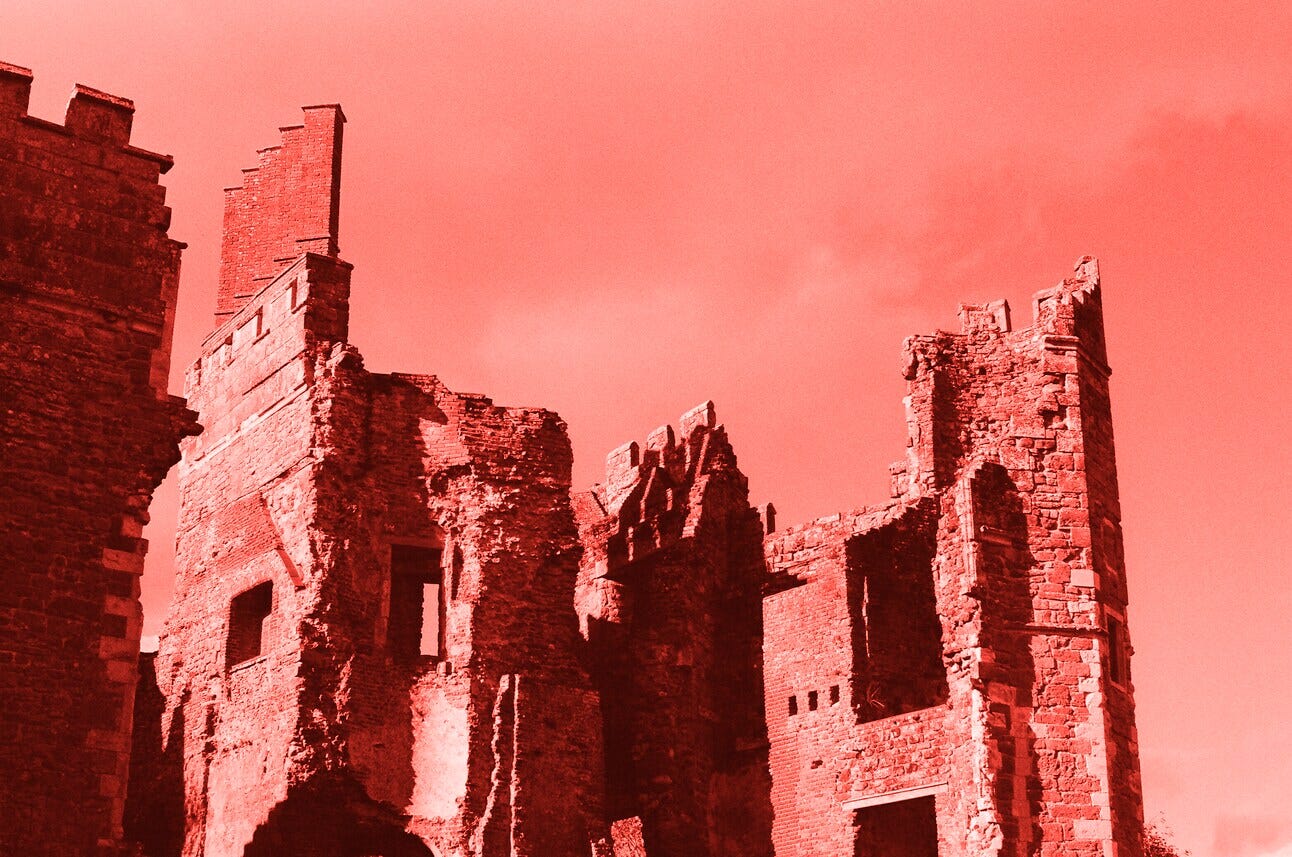
By 1464, Bamburgh Castle, once considered untakeable, fell to bombards in days. Cannons could blast walls from a distance. The moat suddenly didn’t matter. You could pound the stone to rubble without ever crossing the water.
The response wasn’t to abandon defence entirely. It was to rethink what defence meant. Engineers developed star forts with lower, thicker walls designed to absorb cannon fire rather than resist it. The defensive strategy evolved because the offensive technology had changed.
I’ve been thinking about this because something similar is happening in software.
When Software Was the Moat
For decades, software itself was the moat.
Oracle built an empire on this. In the 1980s and 1990s, creating a relational database required extraordinary engineering talent, years of development, and millions in investment. If you wanted enterprise-grade data management, there were only a handful of players who could deliver it. Oracle’s competitors at Ingres might have had better technology at times, but Oracle had the resources, the salesforce, and the execution muscle to dominate.
The pattern repeated across enterprise software. SAP. Salesforce. Building something comparable meant assembling large teams of expensive engineers and hoping nobody else got there first. The moat was complexity. The moat was the sheer difficulty of building.
Ideas were cheap. Execution was everything. And execution meant engineering resources.
The Gunpowder Moment
AI has changed the equation.
I rarely ask myself anymore whether something can be done. I mostly ask whether it should be done, and whether there’s something else we could build instead that brings more value.
Work that would have taken weeks now takes days. Not because we’re dramatically better engineers, but because AI has compressed the build cycle. I can essentially hire an army of agents and let them do the heavy lifting while I guide them. We’re easily ten times faster than we would have been without these tools.
This isn’t unique to me. Every competent technical team is experiencing some version of this compression. Building excellent software is no longer the scarce resource it once was. The cannons have arrived. The walls are coming down.
So what’s left?
The New Defensibility
If software complexity isn’t the moat anymore, what is?
Some things still work. Data advantages remain meaningful. If you’ve accumulated proprietary datasets that nobody else can access, that’s hard to replicate. Distribution matters. Getting embedded in workflows, becoming the default choice, building the integrations that make switching painful. These are real, if temporary, defences.
But I’ve become increasingly convinced that the durable moat in this era is something less tangible.
Trust.
Not vendor lock-in. Not switching costs. Actual trust. The kind where a client wants to keep working with you not because leaving would be difficult, but because staying feels obviously right.
I had a client recently who, after we delivered a solution that helped them scale significantly faster, started looking for more problems they could bring us. Not shopping around for alternatives. Not benchmarking competitors. Looking for more opportunities to work together.
The technical solution worked. But what they wanted more of wasn’t the technology. It was the relationship. The shared vision. The confidence that we understood their business and would help them grow.
They weren’t trapped. They were choosing to stay.
Trust Isn’t Just Competence
Here’s where it gets interesting. Trust in this context isn’t just about being good at what you do. It’s about something more like partnership.
When I work with clients, the goal isn’t to hand them an API and say “figure it out.” It’s not even to hand them working software. It’s to guide them to the outcome they actually need, which often isn’t what they initially asked for. To think alongside them. To care whether the value materialises.
The technology is table stakes. What matters is whether you’re a partner who shares their vision and grows as they grow.
This creates a kind of defensibility that’s difficult to compete away. A competitor might build something technically equivalent. But they haven’t spent months understanding this client’s business. They haven’t earned the confidence that comes from navigating problems together. They haven’t demonstrated that they’ll be there when things go wrong.
Why would the client take that risk?
Brand as Trust at Scale
At scale, this dynamic becomes what we call brand.
Think about the companies people want to work with, not just tolerate working with. Stripe in payments. HubSpot in CRM. These aren’t just vendors with good products. They’ve created something aspirational. Working with them signals something about your own company.
In the B2B world, brand is trust that travels. It’s the confidence that transfers before you’ve worked together directly. It’s the reason an enterprise might choose a particular partner not because they’ve evaluated every alternative, but because they believe in what that partner represents.
There’s even something beyond trust. Call it desire. Some companies become a signal of your own ambition and taste. Choosing them says something about you. That’s not just defence. That’s offence.
The Moat That Evolves
The historical lesson from gunpowder isn’t that defence became impossible. It’s that defence had to evolve.
Star forts replaced high walls. Lower profiles and earthen ramparts replaced stone that shattered under bombardment. The engineers who survived were the ones who understood that the old approach was obsolete and built something new.
Software moats still exist. They’re just different now.
Data. Distribution. And increasingly, relationships that compound over time.
The companies that keep trying to build higher walls, that treat technical complexity as their defence, will find themselves breached. The companies that build trust, that become genuine partners rather than vendors, that create experiences people want to return to, will find a different kind of durability.
Not permanent. Nothing is permanent. But renewable. The kind of moat you can keep filling even as the landscape changes.
Because in the age of AI, everyone can build. The question is whether anyone wants what you’re building, and whether they want to build it with you.