

The One Skill That Matters Most
And it's not what you'd expect.

Someone asked me recently what the most important skill for an FDE is.
I’ve thought about this before. Every time I do, I run through the obvious candidates. Technical depth. Business acumen. Domain expertise. The ability to context-switch across ten different codebases in a week.
They all matter. But if I can only choose one, it’s communication skills.
Not because the other things don’t matter. Because communication is the multiplier on everything else.

The Spectrum
An FDE’s week involves conversations across an absurd range of stakeholders.
There are sales calls where you need to hype things up, add a bit of fluff, match the energy of someone who lives and breathes pipeline metrics. You’re not lying, but you’re packaging things in a way that lands.
Then there are calls with software engineers who think in systems and APIs and edge cases. They don’t want excitement. They want precision. They want to know the exact architecture, the failure modes, the integration points.
In between, there are operators who know their domain deeply but aren’t technical. CFOs who care about ROI and timelines. Product managers who want to understand what you’re learning. Champions who need to sell the project internally.
Each requires a different version of you.
Code-Switching Is the Job
The temptation is to think you have a communication style and others should adapt to you.
That’s backwards.
If you want to be an effective communicator, you adapt to others. You match their tone, their pace, their vocabulary. You meet them where they are.
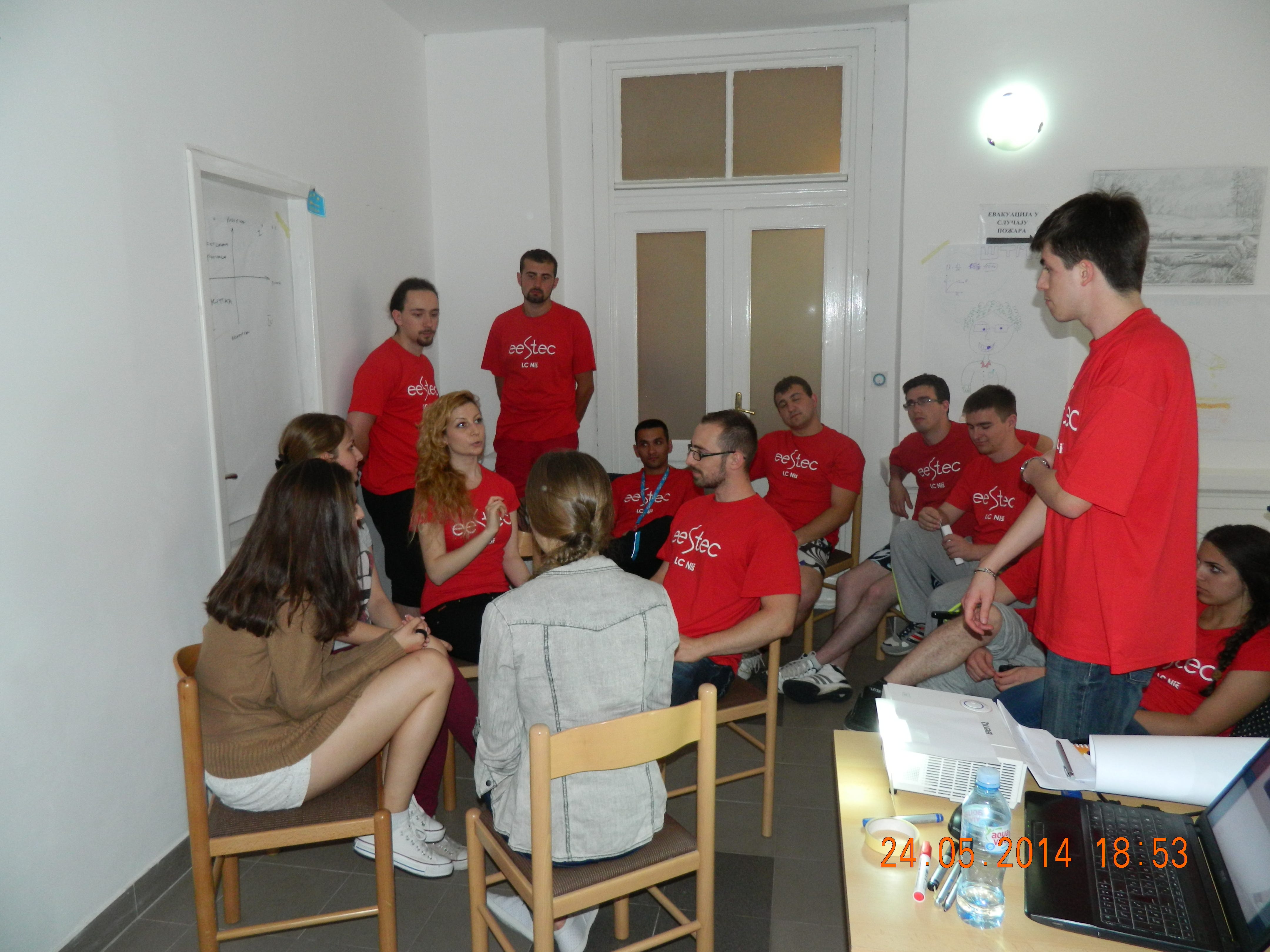
I learned this early. During my studies, I joined EESTEC, a students’ organisation where I had opportunities to develop communication skills alongside the technical education. I attended trainings in feedback, negotiation, fundraising. I conducted meetings with management-level executives at international companies while I was still a student. Later, I trained to become a certified soft skills trainer myself.
It wasn’t intuitive. It was deliberate practice.
The Failure Mode
The most common way FDEs fail at communication is being too technical with non-technical stakeholders.
Nobody likes feeling like they’re not smart enough for a conversation. When that happens, people back off. They stop asking questions. They nod along without understanding. The meeting looks successful but nothing useful was exchanged.
I’ve seen this kill projects. Not because the technology failed, but because the FDE couldn’t translate between worlds.
The Forgotten Stakeholder
I’ve written before about the difference between champions and operators. Sponsors provide funding and strategic direction. Champions are the passionate advocates closer to the work, driving daily support and influencing adoption. Operators are the people who’ll actually use the solution.
Here’s what I’ve learned: FDEs typically under-communicate with operators.
We focus on the sponsor because they control the budget. We focus on the champion because they’re our day-to-day counterpart, removing roadblocks and keeping things moving. We have plenty of internal discussions with our own team.
But if you don’t communicate well with the person who’ll actually use the thing every day, the project is almost always destined to fail. They can reject the solution outright. They can give negative feedback that erodes the champion’s confidence. They can simply not use it, and all your work sits there gathering dust.
The key is getting operators involved early. Gaining their trust. Actively listening. Extracting as much as possible from them, not just for requirements but for buy-in.
Geography Matters
Communication isn’t universal.
In the Netherlands, where I work now, people have a direct, simple style. They say what they mean. It’s efficient if everyone operates that way. But it also makes you lazy. You expect people to tell you everything on their mind.
That doesn’t happen everywhere.
I lived in the UK for a few years and learned the art of reading between the lines. Saying things without saying them. Understanding what “that’s interesting” actually means.
Americans tend to interrupt each other naturally. If you wait too long before jumping in, the other person simply continues talking. You can feel like you never get a word in.
If you want to communicate effectively across regions, you need to learn how different people communicate. There’s no single right approach.
Why Not Technical Skills?
People wonder if technical skills are the real differentiator. They’re important, but they’re table stakes.
For the FDE role, we assume a certain level of technical depth. You can’t do the job without it. But here’s the thing: it’s probably harder to teach someone engineering from zero than to teach effective communication to someone who’s introverted.
Both are hard. Neither is easy.
If we assume people interested in the FDE role already have solid technical foundations and baseline communication skills, I’d always tell them to invest more in sharpening communication. That’s where the leverage is.
It’s Teachable
Some people assume communication skills are innate. You either have them or you don’t.
That’s wrong.
It might come naturally to some people. Assume you’re not that person. Work on it. Attend trainings, online or in person. Put yourself in situations where you need to communicate with different people in different contexts. Practice.
The two most successful projects I’ve worked on recently both started with excellent kick-off meetings. Aerospace parts industry and wholesale. Different domains, similar pattern.
I matched their tone of voice, their pace, their style. When they explained something, I repeated it back to them to confirm I understood. That built confidence. Then I asked the right open-ended questions, which led them to explain their processes in far more depth than they initially planned.
That’s not luck. That’s a skill I developed over years.
The Argument
Technical skills let you build the thing.
Communication skills let you figure out what to build, convince stakeholders it’s worth building, extract the knowledge you need to build it right, and get people to actually use it once it’s built.
Every other skill an FDE has gets amplified by good communication. Every other skill gets diminished by poor communication.
If I can only choose one, it’s not even close.