

The Best AI Work Is Deletion
Most processes were shaped around people and their limits. AI is a reason to ask which parts still need to exist.

Almost every automation project starts the same way. Someone walks me through how a task is done today, step by step, and asks me to build an agent that does the same thing. Take the file from here, check it against that, flag the exceptions, pass it on. The brief is to reproduce the existing motion, faster and cheaper and without the person in the middle.
Most of the time, that is a reasonable thing to ask for, and a reasonable thing to build. Replication has a clear before and after, the value is easy to point at, and nobody has to renegotiate how the work is organised. I am not going to pretend that kind of project is beneath anyone. A lot of real value gets delivered that way, and for many problems it is exactly the right call.
But it is worth noticing what you are copying when you copy a process.
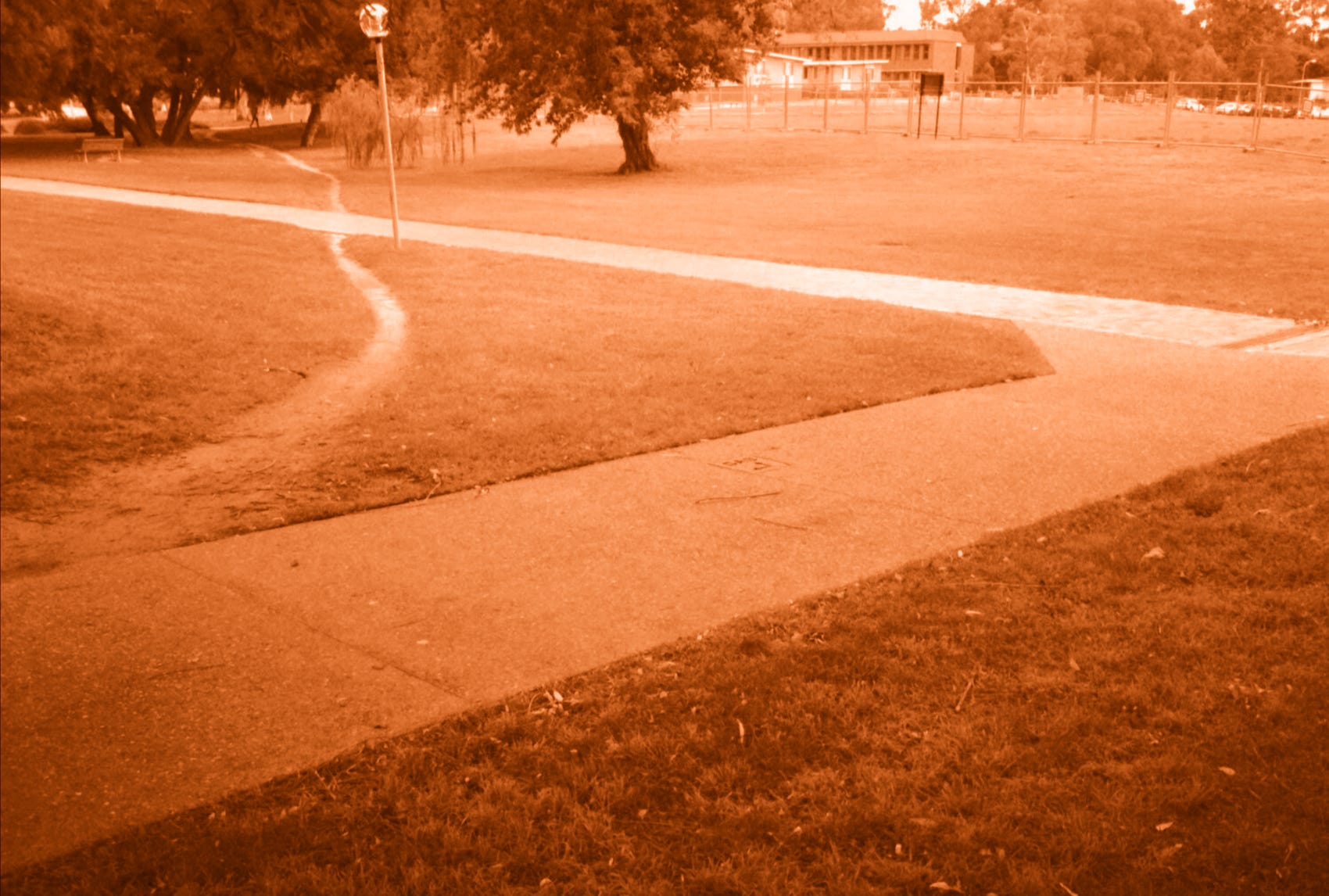
Most steps were built for people
A process is a record of the constraints that existed when it was designed. Someone could only hold so much in their head, so the work was split across three roles. Information could not move between two systems on its own, so a person was placed in the middle to carry it across. Nobody trusted the output of the first step, so a second step was added to check it. Over the years these accommodations harden into the way it works, and after long enough nobody remembers that most of them were answers to questions about human capacity rather than questions about the work itself.
The clearest version of this is almost a century old, and it is one of the most studied episodes in the history of technology. When factories first electrified, many of them simply swapped the large central steam engine for a large central electric motor and changed nothing else. The machines stayed lined up along the same shafts and belts, arranged for a building that had a single source of power in the middle. The productivity gains everyone expected did not arrive. They came later, once a generation of managers stopped treating electricity as a quieter steam engine and put a small motor on each machine, which meant the machines could finally be arranged around the flow of the work rather than the location of the engine. Economists have a name for the gap between having a technology and getting the gains from it, and electrification is the example they reach for. The power had been available for decades. The reorganisation was the hard part.
We are doing the early version of this now. We are dropping AI onto the spot where the old engine used to sit and asking why the numbers are not better.
The bigger win, and why it is rare
The projects I am proudest of are the ones where the customer gave me room to do more than replicate. The brief in those cases was larger than making a step faster. It was closer to a standing invitation: look at this end to end, and tell us which parts of it still need to be here. When that happens, the most useful answer is often that a step should not be automated at all, because it should not exist. The check that was added because the earlier step was unreliable is not needed once the earlier step is reliable. The handoff that existed to move data between two systems disappears when the same agent can read from both. You are not speeding the step up, you are removing it.
That is where the real gains live, and it is also the thing customers are slowest to allow.
I have learned not to read that reluctance as timidity. Removing a step is a far larger commitment than automating one. Automating a step leaves the shape of the work intact and gives everyone an easy way to roll back if it goes wrong. Removing a step means someone now owns the risk that the step used to cover, and it usually means crossing into another team’s territory, or touching headcount, or explaining to an auditor why a control is gone.
Some of those steps are there for reasons that are not visible from the outside. A lot of what looks like waste is scar tissue. The reconciliation, the second sign-off, the manual review that feels redundant, each one is often the residue of a specific time something went badly wrong, and the step is the organisation’s memory of it. You cannot tell from the outside whether a step is a relic of an old constraint or a guardrail protecting against a real failure. The only way to know is to understand why it was put there in the first place. That is why the room to redesign a process has to be earned rather than assumed. You get it by being right about the small things first, by showing you understand the work well enough to know which fences are safe to take down.
So the ideal and the reality sit some distance apart. In an ideal engagement, the customer hands you the whole process and the freedom to question all of it. In a real one, you start by automating the step you were asked to automate, and you earn the right to ask the larger question slowly, if you earn it at all.
The same logic, one level up
What is true of a single process is becoming true of whole companies.
A company being built now, with these tools assumed from the start, does not carry these accommodations inside it. It does not have the three roles that exist because one person could not hold it all, or the team whose entire job is to move information between systems. It is designed around what the technology can do, the way the rebuilt factories were designed around the flow of work. It has no old layout to defend.
An incumbent is the opposite. It is made almost entirely of steps that were shaped around people, accumulated over decades and defended by the teams who run them. Automating those steps one at a time makes the company faster at doing what it already does. It does not change the layout. A competitor that never had the layout in the first place can move in ways that bolting AI onto the old structure cannot match.
I want to be careful here, because the story of the AI-native upstart eating the incumbent is one that technology people have told many times, and it has disappointed at least as often as it has come true. Incumbents have things that are hard to copy: distribution, data, brand, the trust of customers who would rather not switch, and in regulated work a moat a newcomer cannot wish away. The displacement, when it comes, is usually slower and more partial than the people predicting it expect, and the incumbents that come out ahead are very often the ones that adapt, precisely because they can pair the redesign with assets a newcomer does not have.
But adapting and bolting on are not the same thing, and the distance between them is the whole story. The companies that treat this as a chance to redraw the layout will pull away from the ones that treat it as a faster engine for the layout they already have. That is less a prediction about which names survive than a prediction about which behaviour wins.
What this means if you do this work
If you build and deploy this kind of system for a living, that distance is the most important thing happening to your role, and it is worth sitting with what it implies.
Every established company now has a version of the same project in front of it, and it is not really an “add some AI” project. The harder version is this: work out which parts of how we operate were answers to old constraints, and rebuild around the parts that are left. That is an enormous amount of work, and it is exactly the kind of work that does not fit a product bought off a shelf, because the answer is different inside every organisation.
For most of corporate history, work like that meant hiring a consultancy, spinning up an internal team, or bringing in an agency, because the building itself took a lot of hands. That has changed. One engineer who is good at this, with the tools we have now, can carry what used to need a room full of people. The redesign that needs doing keeps growing while the cost of the person who can do it keeps falling, and that is usually what a wave looks like before it arrives. You are right in its path.
But demand is not the whole of it, and it is worth being honest about which version of this role is the one that matters. The building is turning into the easy part, the piece the tools increasingly handle on their own. What stays scarce is the judgement to look at how a company works and see which parts of it no longer need to be there, and the standing to take them out. The engineers who define this field will not be the ones who automate the fastest. They will be the ones who know what to delete.
Totally agree even today we build so much that we don’t use or is needed but that sure adds the maintenance overhead to it
or deciding what not to do